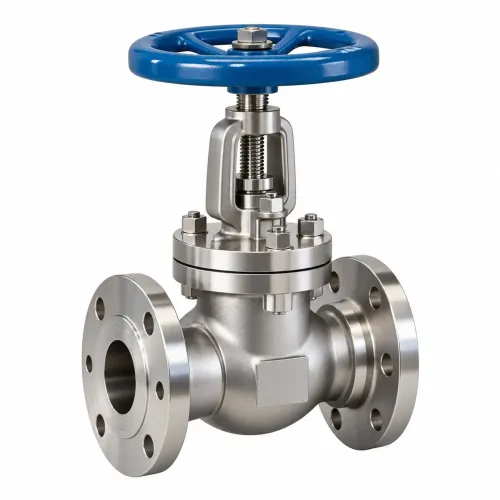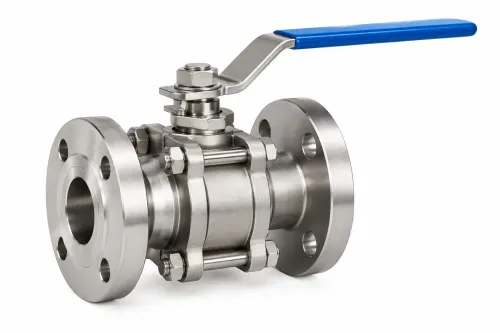
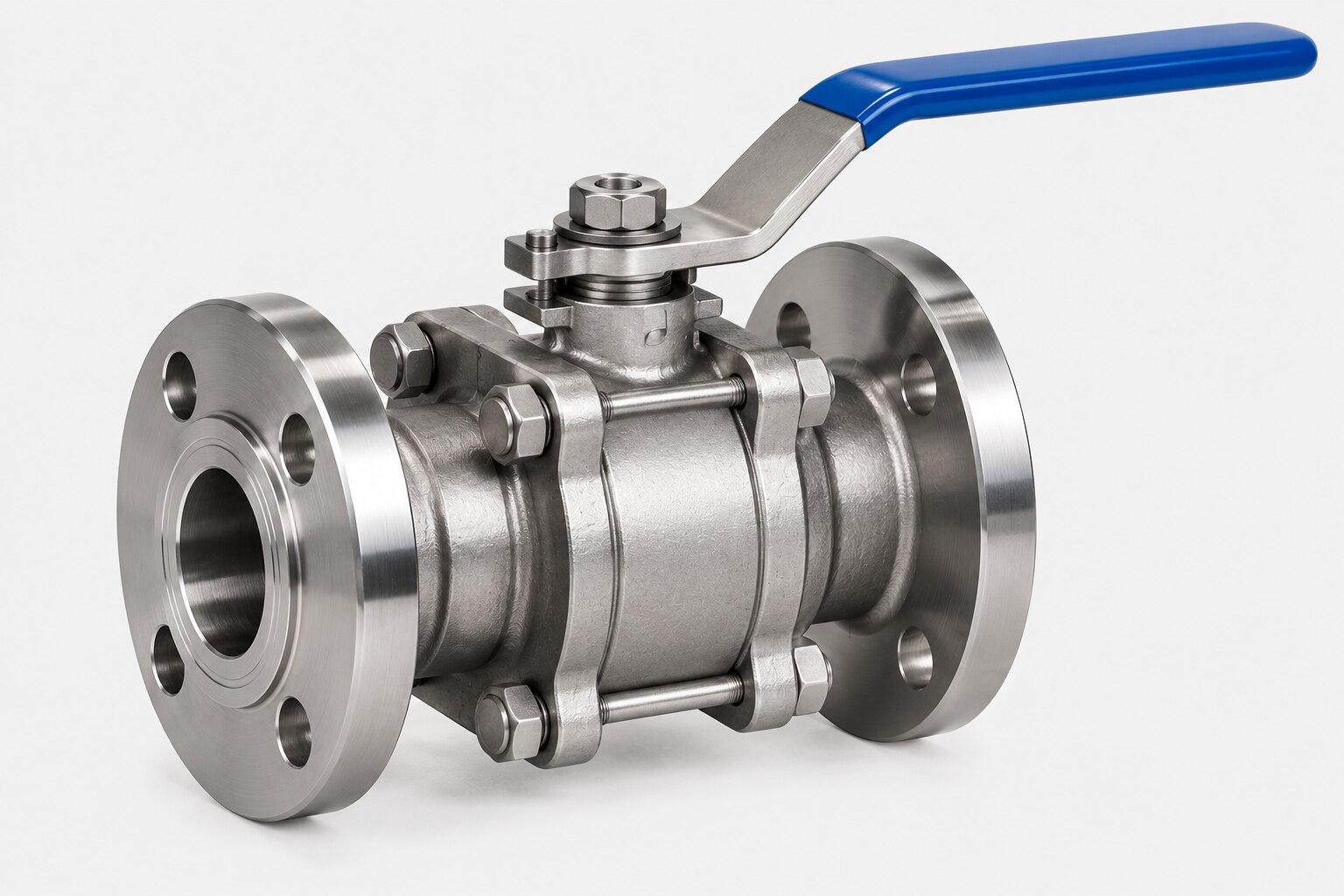
A ball valve must match the fluid, pressure, temperature, line geometry, shut-off duty, and actuator load; nominal pipe size alone cannot establish that match. By the end, you will be able to distinguish valve designs, specify materials and standards, check installation dimensions, and prepare a purchase requirement that can be verified through testing and documentation.
Key takeaways
- Match seat and body materials to fluid, pressure, and temperature.
- Choose full-port valves when low pressure drop matters.
- Check pressure class, test standard, certificates, and traceability documents.
- Put bore, ends, actuation, testing, and materials into the purchase specification.
How the Ball, Stem, and Actuator Produce Reliable Shut-Off
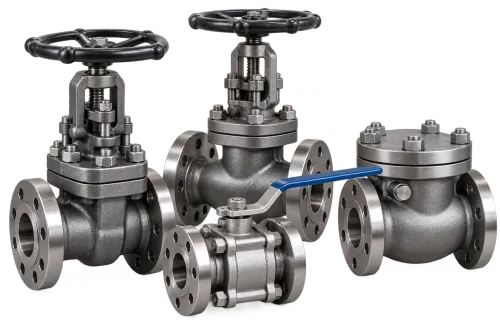
A ball valve closes when its drilled sphere rotates 90 degrees between the open and closed positions. In the open position, the bore aligns with the pipeline; in the closed position, the solid side faces the flow and the seats seal around the ball.
The stem transfers handle or actuator movement, so a 90-degree quarter-turn gives rapid isolation with no multi-turn travel.
| Option | Mechanical action | When it applies |
|---|---|---|
| Floating ball valve | Line pressure pushes the ball into the downstream seat, creating shut-off; torque rises with pressure and size. | Compact valves for small or moderate line sizes, clean media, and ordinary pressure duties. |
| Trunnion-mounted ball valve | Upper and lower stems support the ball, reducing seat load and operating torque. | Large-bore, high-pressure, or high-cycle service where actuator load would make a floating design impractical. |
Choose ball valve actuator torque from the maximum required torque across the full operating envelope, not from diameter alone. Include breakaway torque, differential pressure, seat loading, packing friction, temperature, media effects, and any fail-open or fail-closed requirement; under-sizing leaves the valve stuck at start-up or unable to seat.
Use a valve for on-off service unless you have completed control-valve sizing. Throttling service requires flow coefficient, cavitation, flashing, choking, noise, travel characteristic, and actuator resolution checks under IEC 60534-2-1. A standard ball valve left nearly closed can erode its seats and control erratically.
How Service Conditions Determine Materials, Seats, and Port Size
A soft seat gives tight shut-off in clean fluids at moderate temperatures, but its polymer or elastomer can lose strength under heat, chemical attack, decompression, solids, or fire. A metal seat extends the range for dirty and hot service, at the cost of higher torque and more demanding machining.
| Service | Body material, ball material, and stem material | Seat and port decision |
|---|---|---|
| Water service | Carbon steel or stainless body; stainless ball and stem | Soft seat for clean water; full-port for low loss or pigging |
| Steam service | Alloy-rated body, ball, and stem | Metal seat with temperature-rated packing |
| Hydrocarbon service | Materials compatible with the fluid; verify ISO 15156/NACE MR0175 for H2S | Soft seat for clean, moderate-temperature duty; metal seat for fire or heat |
| Corrosive chemicals | Select body, ball, and stem alloys from concentration, chloride level, and temperature | Confirm seat compatibility from the chemical supplier’s data |
| Abrasive media | Hardened ball and compatible trim | Metal seat; avoid soft seat erosion |
| High-temperature service | Alloy body, ball, and stem rated for operating temperature | Metal seat and high-temperature packing |
Choose full-port when low permanent pressure loss, lower bore velocity, or pigging matters. Choose reduced-port when a smaller, lighter valve and lower actuator load outweigh the added restriction; confirm the actual minimum bore.
Check the ASME B16.34 pressure-temperature rating for the selected material, not Class 150 or Class 600 alone. “Fire-safe” requires evidence of the tested construction under API 607, including its seat and stem arrangement.
How Body Construction and End Connections Affect Maintenance
A one-piece ball valve reduces purchase cost and external leak points, but its sealed body usually forces line removal when the seat or ball needs service. Check the face-to-face and end-to-end dimensions against ASME B16.10; flange dimensions and ratings follow ASME B16.5, while large-diameter flanges may follow ASME B16.47.
Nominal size and Class alone do not guarantee a fit.
| Body design | Maintenance access | Installation consequence |
|---|---|---|
| One-piece ball valve | Lowest access; replace the complete valve for internal repair | Compact and economical, but line removal is usually required |
| Two-piece ball valve | The body joint permits limited disassembly after removing it from the line | A practical general-purpose choice; confirm joint access and gasket replacement space |
| Three-piece ball valve | Unbolt the centre section and remove the ball and seats without disturbing the end connections | Best for frequent maintenance, but needs room for tie bolts and a higher purchase cost |
| End connection | Maintenance effect | Installation decision |
|---|---|---|
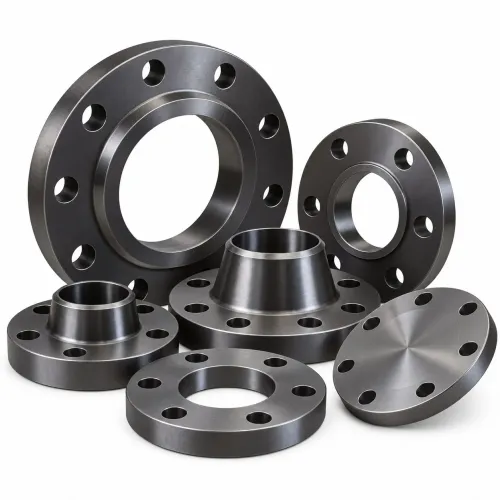
| Flanged ends | Unbolt the valve, replace gaskets, and remove it without cutting pipe | Provide bolt clearance, match ASME B16.5 or ASME B16.47, and verify facing and bore |
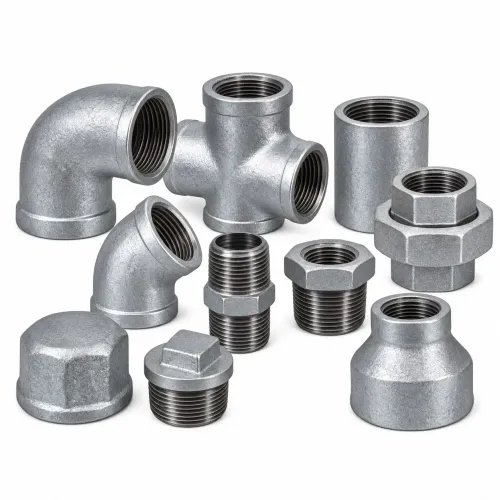
| Screwed ends | Compact, but thread damage or seized joints can make removal difficult | Use where line removal is acceptable and the medium will not attack exposed threads |
| Socket-weld ends | Permanent joints require cutting the valve out for replacement | Suit small-bore, vibration-resistant piping after weld inspection |
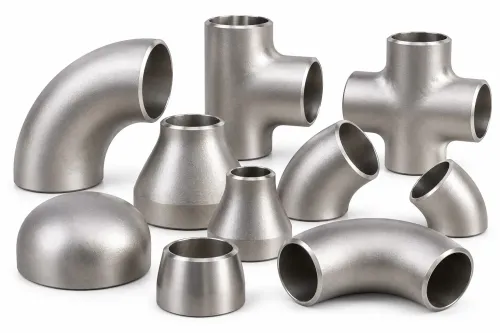
| Butt-weld ends | Minimise crevices and leakage paths, but replacement requires cutting and rewelding | Reserve space for alignment, weld access, and post-weld inspection |
How Ratings, Tests, and Certifications Prove Suitability
Require a documented pressure-temperature rating, not “Class 600” alone. ASME B16.34 ratings change with body and trim material and temperature, while the flange or weld end can impose a lower limit. State the material group, design temperature, pressure, end-connection rating, and whether API 6D applies.
| Claim | Evidence to require | Failure prevented |
|---|---|---|
| “API compliant” | API 598 shell test and seat test records, with pressure, fluid, duration, direction, and result | A sound body being mistaken for a tight closure |
| “Zero leakage” | ISO 5208 leakage-rate class and specified test conditions | An undefined acceptance standard |
| “Fire-safe” | API 607 certificate identifying tested construction, seats, stem arrangement, size, and pressure class | Assuming every metal-bodied valve passes a fire test |
| “Low emissions” | ISO 15848-1 type-test classification and ISO 15848-2 production-test record | Treating design qualification as production evidence |
Request these documents with the valve:
- EN 10204 inspection certificate, heat numbers, body and trim certificates, and material traceability.
- Shell-test and seat-test reports that identify the actual valve, test medium, pressure, duration, and leakage-rate class.
- Actuator or functional-test records when the valve is automated.
- ISO 15156 and NACE MR0175 material assessment for hydrogen-sulfide service, including hardness, heat treatment, environment, H2S partial pressure, chloride, and temperature limits.
A generic certificate of conformity cannot prove the supplied pressure-boundary material or test result. API 607 also does not qualify an untested size or altered seat construction.
How to Turn the Valve Selection into a Verifiable Purchase Requirement
Put the required dimensions, operating loads, materials, testing, and documents on the valve schedule or purchase order—not merely “ball valve, DN100.” Use this sequence:
1. Identify the service: line class, nominal size, pressure class, design temperature, medium, normal and maximum differential pressure, and required shut-off direction. State the minimum bore, because nominal size alone does not prove full-port flow or pigging access.
2. Specify connection geometry: end connection, flange facing, bolt pattern, and face-to-face dimension. Reference ASME B16.5 for applicable flange dimensions and ASME B16.10 for valve face-to-face dimensions; a valve can match the pressure rating and still fail installation.
3. Define the operating package: manual or actuated operation, maximum required torque across breakaway, seating, temperature, packing friction, and maximum differential pressure, plus the actuator fail position. Request the actuator test record.
4. Name the required construction and verification: body, ball, stem, seat materials; pressure and functional tests; inspection certificate to EN 10204; heat number traceability; and any specified fire test such as API 607. Reject “fire-safe” without the tested construction, size, and pressure class.
5. If the valve forms part of a safety-instrumented function, identify the solenoid, feedback, diagnostics, and proof-test interval under IEC 61511. Welcome To S A Enterprise can be asked to return the completed valve datasheet with these fields and certificates before dispatch.
Frequently asked questions
How does a ball valve achieve shut-off?
A drilled ball rotates 90 degrees; its solid side blocks flow while the seats seal around the ball.
Which service conditions determine ball valve materials and seat selection?
Fluid chemistry, pressure, temperature, solids, pressure cycling, and required flow capacity determine the body, ball, stem, seat, and port choices.
Why do body construction and end connections matter for maintenance?
One-piece, two-piece, and three-piece bodies affect access and replacement, while threaded, socket-weld, butt-weld, and flanged ends affect installation and removal.
What documents verify that a ball valve suits the application?
Check the pressure-temperature rating, hydrostatic and seat-test results, material certificates, dimensional data, inspection records, and required certifications.