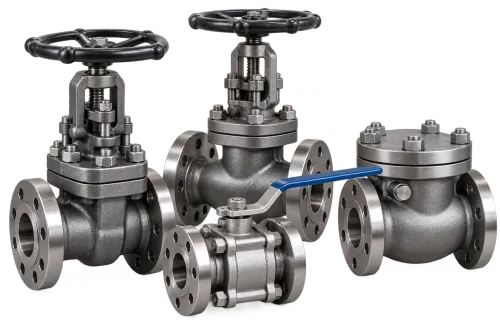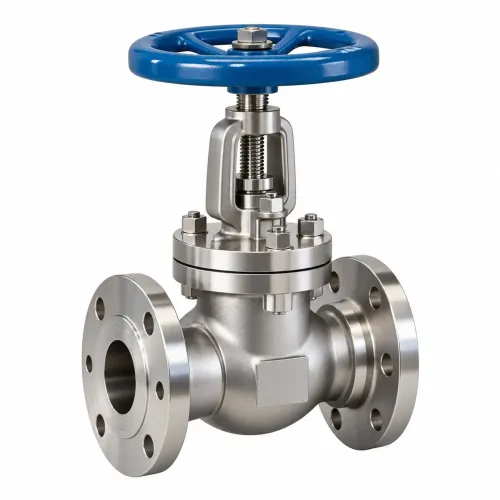
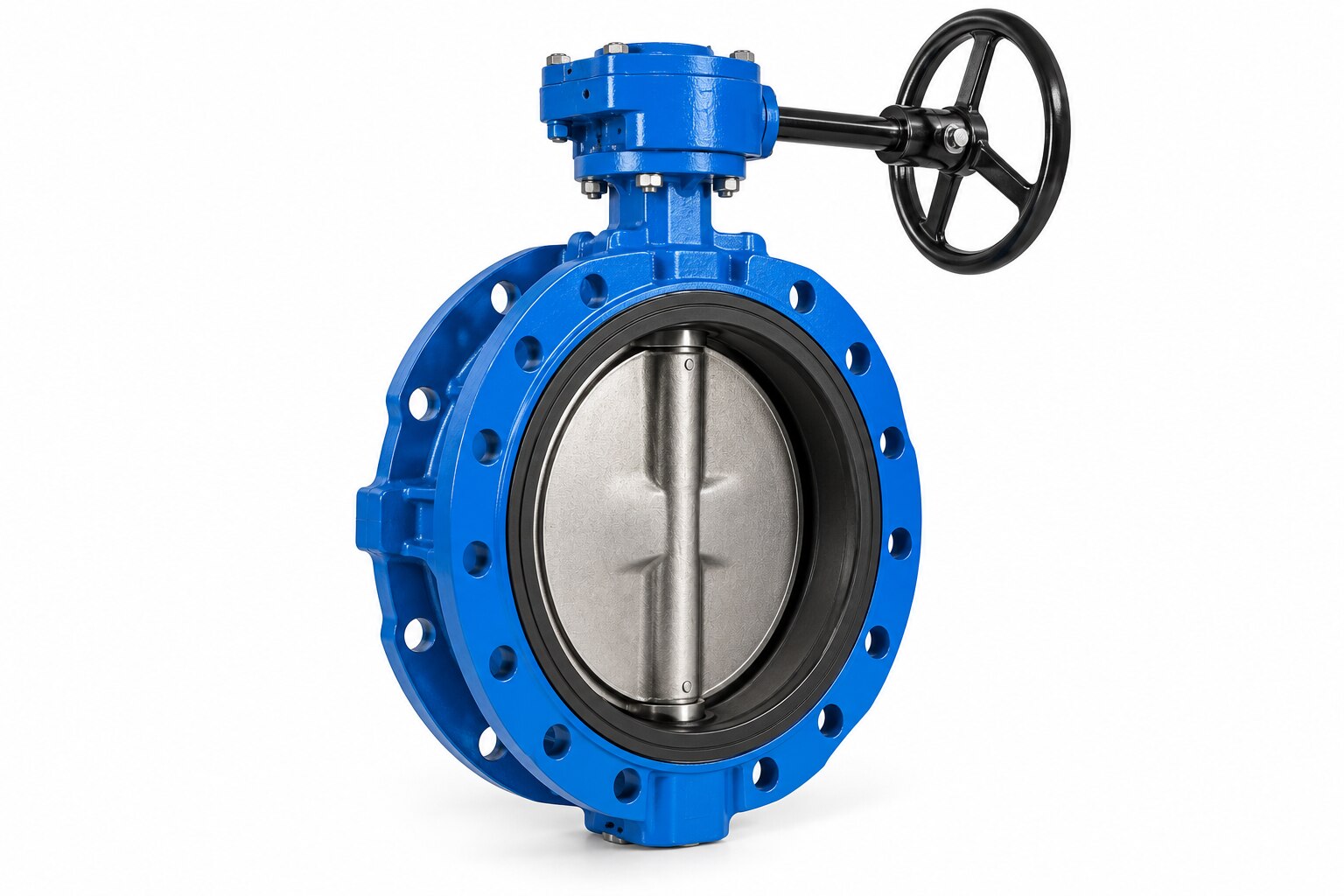
A large-diameter butterfly valve must match the pipe dimensions, pressure-temperature duty, fluid, shutoff requirement, and operating torque; diameter alone does not identify a suitable design. By the end, you will have a practical way to compare manufacturers, specify the valve, verify test evidence, and reject offers that require field modifications or leave actuator performance unproven.
Key takeaways
- Match DN/NPS, pressure class, face-to-face length, and flange standard.
- Choose seat and body materials for temperature, pressure, and fluid compatibility.
- Require test reports, certificates, traceability records, and torque calculations.
- Confirm actuator sizing, delivery capacity, spares, and installation support.
How do you compare a manufacturer’s size, rating, and dimensional capability?
Compare a manufacturer against your actual nominal diameter, pressure class, valve body style, seat construction, and end connection—not a catalogue label such as “large diameter.” Large-diameter butterfly valve sizes fall under different standards and service assumptions.
| Standard | Size or scope | What to require |
|---|---|---|
| AWWA C504 | Rubber-seated waterworks valves, 3–72 inches | Applicable pressure class and actual nominal diameter |
| AWWA C516 | Large-diameter rubber-seated valves, 78 inches and larger | C516 compliance; C504 compliance does not qualify a 78-inch valve |
| API 609 | Process and pipeline butterfly valves | Edition, API 609 pressure class and size range, body style, seat construction, and connection type |
Reject a nominal Class 150 or Class 300 rating without the pressure-temperature table for the complete body, disc, shaft, and seat combination. Elastomer temperature limits can reduce the usable rating even when the metal body carries the nominal class.
Control installed length through ISO 5752 or EN 558, naming the exact series. Check flange drilling, facing, bolt pattern, and dimensional limits against ASME B16.5 through NPS 24, ASME B16.47 from NPS 26 to NPS 60, or EN 1092-1 where applicable.
Before purchase, require a certified dimensional drawing showing:
- Face-to-face length and flange details
- Disc clearance, bore, bolt pattern, and lifting points
- Weight, centre of gravity, and actuator envelope
A mismatch can force a spool, pipe dismantling, or site drilling.
Which butterfly valve design and materials fit the operating service?
Match the valve construction to the medium, temperature, pressure, velocity, cycling frequency, and required shutoff. A concentric resilient-seated butterfly valve suits many freshwater isolation duties because its elastomer seat can provide bubble-tight closure, but seat chemistry and temperature limits determine its usable pressure rating.
| Design | Strength | Check before selection |
|---|---|---|
| Concentric resilient-seated butterfly valve | Economical bubble-tight isolation | Elastomer temperature limit, chemical compatibility, and pressure-temperature table |
| Double-offset butterfly valve | Less seat rubbing for frequent cycling, higher pressure, and selected abrasive or hydrocarbon service | Leakage class, disc-edge wear, flow direction, and abrasive compatibility |
| Triple-offset butterfly valve | Metal-seated service for steam, high temperature, and fire-safe duties | Thermal expansion, seat damage, orientation, and specified leakage acceptance |
Specify the disc, shaft, seat, body, fasteners, and coatings as one materials schedule. Freshwater, seawater, abrasive slurry, hydrocarbons, steam, and corrosive chemicals create different corrosion, erosion, swelling, and temperature risks. Require a chemical compatibility statement for the exact materials, not a generic fluid-suitability claim.
For drinking-water contact, request NSF/ANSI/CAN 61 evidence and specify AWWA C550 interior-coating requirements where applicable. Require the actual pressure-temperature table for the complete disc shaft seat body materials combination. “Zero leakage” is incomplete without the test standard, direction, and permitted leakage rate.
Which end connection and installation details should the manufacturer prove?
Choose the connection from the piping arrangement and maintenance plan, not from valve availability. A wafer butterfly valve sits between mating flanges and normally relies on through-bolts, so use it only where flange alignment, bolt access, and the removal method are controlled.
| Connection | Installation advantage | Evidence to require |
|---|---|---|
| Wafer butterfly valve | Compact installation between mating flanges | Through-bolt arrangement, flange clearances, disc clearance, and removal method |
| Lugged butterfly valve | One-sided removal or selected dead-end arrangements | Permitted dead-end pressure and required downstream flange condition |
| Single-flanged butterfly valve | Different support and dismantling arrangement | Certified support, alignment, and dismantling details |
| Double-flanged butterfly valve | Separate flange support at both ends | Exact drilling, face-to-face length, and alignment requirements |
Do not treat every flanged butterfly valve as interchangeable. Ask for shaft orientation, minimum pipe bore, lifting points, total weight, centre of gravity, actuator envelope, gearbox support, and stem extension.
The manufacturer’s certified drawing must show flange drilling, facing, bolt pattern, flange clearances, disc overhang, and face-to-face length before fabrication; never correct a mismatch by site drilling or other modification.
For buried or submerged installation, review the external coating system, holiday testing, shaft seals, corrosion allowance, enclosure rating, drainage, stem extension, and maintenance access as separate requirements. Check whether the actuator and gearbox need independent structural support, because pipe flanges may not safely carry their combined weight.
What testing, certification, and traceability evidence belongs in the purchase order?
Put the pressure-test basis in the purchase order before comparing quotations. Specify shell-test pressure, shell-test medium, seat-test pressure, seat-test medium, test duration, test direction, and permitted leakage rate, with API 598, ISO 5208 and EN 12266-1 identified where applicable.
- Require shell testing and seat leakage testing against a named leakage class.
- State whether seat testing covers both flow directions.
- Reject certificates that say only “tested”; they do not prove the required shutoff result.
| Evidence | State in the purchase order | Inadequate evidence |
|---|---|---|
| Pressure tests | Pressures, media, duration, direction, leakage limit, and test standard | “Tested” certificate |
| Materials | Body, disc, shaft, seat, and fastener grades with EN 10204 type 3.1 certificates where specified | Generic material declaration |
| Casting records | Casting inspection, weld-repair controls, heat treatment, dimensional inspection, and non-destructive examination for large pressure-retaining castings | Untraceable repair history |
| Fire-safe qualification | API 607 and the exact valve, seat, shaft-seal, and size configuration tested | Product-family fire-safe claim |
| Potable-water qualification | Coating and wetted-material evidence, including the applicable AWWA C550 and NSF/ANSI/CAN 61 requirements | “Epoxy coated” alone |
Match each material certificate to the valve serial number, heat number, or batch number. For fire-safe service, verify that the tested configuration covers the supplied seat, shaft seal, and size; one variant does not qualify every model. These records reveal a controlled production process rather than a catalogue-level compliance statement.
How do you verify torque calculations, actuator sizing, and supply capability?
Actuator selection for large butterfly valves must start with a torque budget tied to the actual valve, medium, pressure, temperature, flow direction, and operating mode—not diameter or nominal pressure alone. Seat design, shaft arrangement, and differential pressure can change the demand substantially.
Require butterfly valve torque data that separately identifies:
- Breakaway torque
- Running torque
- Seating or unseating torque
- Packing and bearing friction
- Differential-pressure effects
- Gearbox losses
- Design margin
Use this record to check gearbox sizing and actuator output at every operating point. For modulating service, request a torque curve and flow-coefficient data across the intended opening range. A valve chosen only for shutoff can cause excessive velocity, noise, vibration, or cavitation when held near the seat.
| Duty | Required evidence | Main risk if missed |
|---|---|---|
| Isolation | Shutoff torque, actuator output, fail position | Valve fails to close or open |
| Modulating | Torque curve and flow coefficient across travel | Poor control, noise, vibration, or cavitation |
| Large installation | Certified drawing, weight, centre of gravity, lifting points, actuator envelope, flange clearances, minimum bore | Pipe strain, disc interference, or inadequate support |
Compare the proposed actuator, gearbox ratio, handwheel effort, fail position, enclosure rating, controls, and structural support requirements. Ask for production capacity, delivery schedule, drawings, and test records for the quoted size—not catalogue availability.
Welcome To S A Enterprise is useful when it converts the duty into a documented valve, actuator, flange, drawing, and test-record package. Give every bidder the same data sheet and evidence checklist so a low price cannot conceal missing engineering information.
Related product
 | CI Valves Butterfly Valve View product → |
Frequently asked questions
How do you compare a manufacturer’s size, rating, and dimensional capability?
Compare the manufacturer’s proven DN/NPS range, pressure classes, face-to-face dimensions, flange drilling, and applicable standards against your piping drawings and service conditions.
Which butterfly valve design and materials fit the operating service?
Select concentric, double-offset, or triple-offset construction according to shutoff duty, temperature, pressure, cycling, and leakage requirements, then verify body, disc, shaft, and seat compatibility with the fluid.
Which end connection and installation details should the manufacturer prove?
Confirm wafer, lug, or flanged construction; flange standard and drilling; face-to-face dimension; flow direction; clearances; bolt access; and suitability for the existing pipe alignment.
What testing, certification, and traceability evidence belongs in the purchase order?
Specify shell and seat leakage tests, test standards and acceptance limits, material certificates, inspection reports, serial-number traceability, coating records, and required certificates before manufacture.
How do you verify torque calculations, actuator sizing, and supply capability?
Request a torque calculation covering breakaway, running, seating, and unseating torque, then check actuator output, safety margin, fail position, cycle time, power supply, delivery schedule, and spare-part availability.