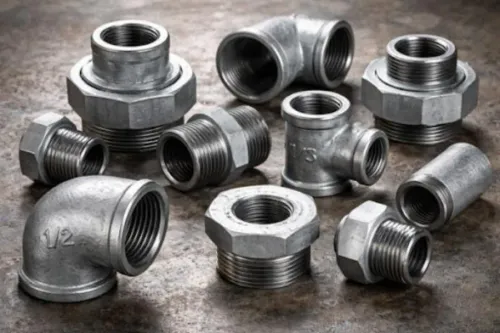
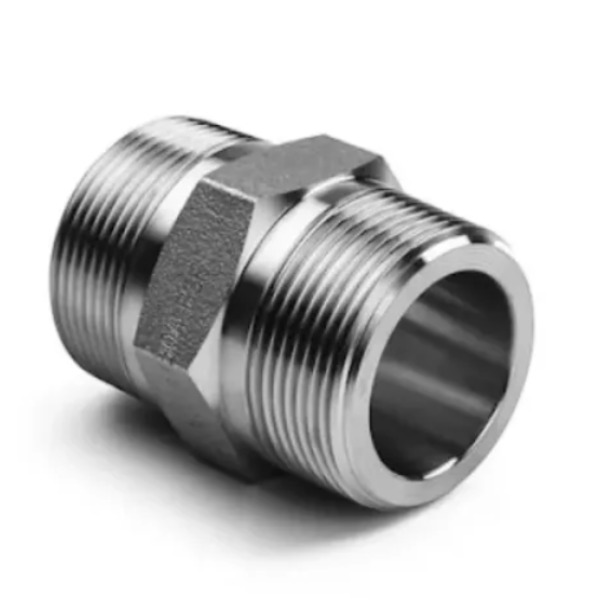
Threaded fittings can simplify installation in suitable piping applications, but procurement becomes more complicated when projects involve multiple sizes, fitting configurations, and technical requirements.
When evaluating VS Threaded Fittings Manufacturers, industrial buyers should focus on compatibility, dimensions, material, threads, and intended service rather than treating every fitting as interchangeable.
Begin With a Complete Fitting Schedule
A purchasing team should ideally work from an approved bill of materials.
The schedule can identify fitting types such as:
- Elbows
- Tees
- Sockets
- Unions
- Bushes
- Reducers
- Nipples
- Caps
- Plugs
Each line item should include the required size, quantity, material, and relevant specification.
This becomes especially useful on Pune industrial projects where procurement may cover hundreds of small piping components.
Verify Thread Requirements
Thread compatibility is fundamental.
A fitting with the wrong thread form can appear close to the required component but fail to engage correctly. Forcing mismatched threaded components together can damage threads and compromise the connection.
Buyers should therefore specify the applicable thread requirement instead of relying only on nominal size.
Consider the Operating Medium
Threaded fittings can be used in various services, but suitability depends on material and operating conditions.
Before purchasing, identify whether the system carries water, air, oil, gas, or another process medium.
Pressure and temperature should also be established.
For aggressive or critical service, engineering approval may be necessary before using a threaded connection.
Check Dimensional Consistency
When many fittings are used across prefabricated assemblies, dimensional consistency can affect installation productivity.
Variation in dimensions, thread engagement, or geometry can create extra adjustment work during fabrication.
This is why buyers should consider repeatability and specification compliance when evaluating suppliers.
Avoid Mixing Procurement Assumptions
One common mistake is assuming that a previous purchase specification applies automatically to a new project.
Different clients may follow different piping standards. Even within one industrial facility, separate utility and process systems can have different requirements.
Procurement teams should always work from the current approved specification.
Consolidate Requirements Where Practical
Contractors purchasing multiple piping components can often simplify coordination by organising requirements into a structured material list.
Instead of issuing scattered enquiries for individual elbows, sockets, and tees, group them by material and specification.
S A Enterprise assists industrial customers in Pune with piping-component requirements, including threaded fittings and related products.
When comparing VS Threaded Fittings Manufacturers, ask whether the offered components correspond with the required material, dimensions, thread specification, quantity, and project documentation.
This approach gives buyers a clearer basis for comparing quotations and reduces the risk of discovering mismatched fittings during installation.
For fabrication companies, plumbing contractors, and industrial maintenance teams throughout Maharashtra, accurate threaded-fitting procurement can also reduce unnecessary inventory. Components purchased according to defined specifications are more likely to be usable across the intended project rather than becoming surplus stock caused by incorrect ordering.
Keywords