Piping systems rarely run in a single straight line. They change direction, branch into multiple lines, transition between diameters, and terminate at equipment. Buttweld fittings make these changes possible while maintaining a welded piping arrangement.
For EPC companies and industrial engineering teams in Pune, understanding the role of Buttweld Pipe Fittings Manufacturers helps improve material specification and piping procurement.
What Are Buttweld Pipe Fittings
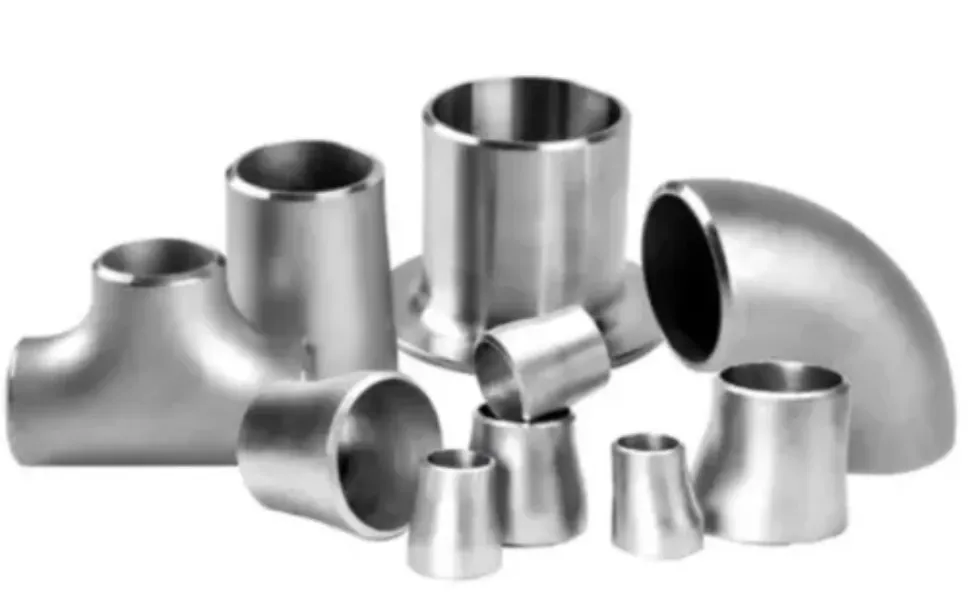
Buttweld fittings are designed to be welded directly to compatible piping. The pipe end and fitting end are prepared so they can be joined through an appropriate welding procedure.
Common fitting types include:
- Elbows
- Tees
- Reducers
- Caps
- Cross fittings
- Stub ends
Different fittings perform different functions within the piping network.
An elbow changes direction. A tee creates a branch. A reducer provides a transition between pipe sizes. A cap closes the end of a line.
Why Industries Use Welded Fittings
A welded piping arrangement can provide a continuous connection suitable for many industrial systems when correctly engineered and installed.
Buttweld fittings are commonly encountered in process plants, utilities, manufacturing facilities, water systems, chemical installations, and other engineered piping networks.
Their suitability depends on material grade, wall thickness, process conditions, welding quality, and applicable project standards.
Matching the Pipe Specification Is Critical
A fitting cannot be selected independently from the pipe.
The engineering team needs to consider factors such as:
- Nominal pipe size
- Material grade
- Schedule or wall thickness
- Fitting configuration
- Dimensional standard
- Process fluid
- Pressure and temperature conditions
Incorrect wall thickness is a common source of procurement difficulty because the fitting must correspond appropriately with the connected piping.
Reducer Selection Needs Particular Attention
Reducers are available in different configurations based on piping geometry.
The appropriate selection depends on line orientation, process requirements, and engineering design. Procurement personnel should therefore follow approved piping drawings and material specifications rather than choosing a reducer solely from nominal inlet and outlet sizes.
The same principle applies to elbows and tees where dimensions and schedules must match project requirements.
Documentation Supports Better Procurement
Large EPC and infrastructure projects may require material identification and supporting documentation as part of procurement procedures.
The exact documentation depends on the project, client specification, material category, and applicable standards.
Buyers should communicate documentation requirements before ordering instead of requesting them after material dispatch.
S A Enterprise handles industrial requirements involving pipe fittings, flanges, valves, and steel piping solutions. For Pune-based projects, sending a consolidated piping material requirement can help ensure that related components are evaluated together.
What to Include in a Buttweld Fitting Enquiry
A useful enquiry should state the fitting type, nominal size, material, schedule, dimensional standard, quantity, and any inspection or documentation requirement.
For reducers, include both end sizes. For elbows, specify the required angle and configuration. For tees, identify whether the requirement is equal or reducing based on the approved piping design.
Clear specifications save time for both procurement teams and suppliers.
Buttweld fittings may represent individual components in a large piping network, but every fitting influences installation compatibility. For industrial projects in Pune, accurate material specification is therefore the foundation of efficient procurement and reliable piping assembly.
Keywords