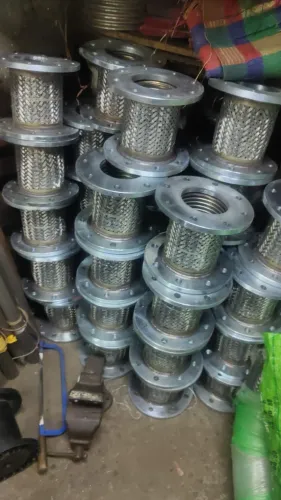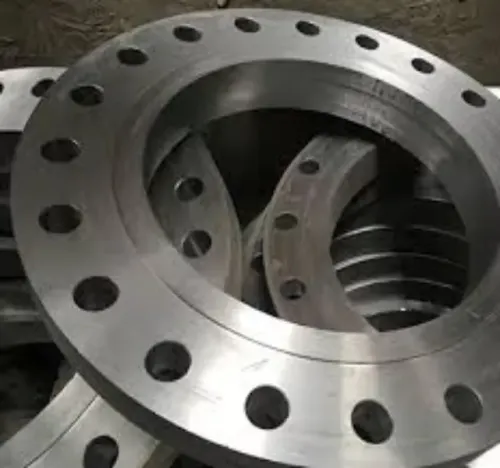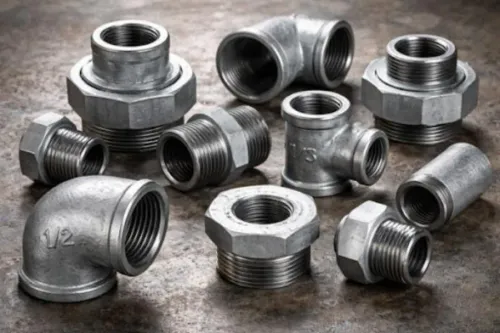
Flanges create detachable connections between pipes, valves, pumps, vessels, and other equipment. Their basic purpose appears simple, yet industrial flange selection involves several important variables including dimensions, pressure requirements, material, facing, and piping standards.
Understanding these factors can help procurement teams communicate more effectively with Mild Steel Flanges Manufacturers when sourcing components for projects in Bhosari.
What Makes Mild Steel Useful for Flanges
Mild steel is widely used in engineering because it combines strength, machinability, fabrication convenience, and practical availability.
Depending on system specifications, mild steel flanges may be considered for utility piping, fabrication work, water systems, machinery connections, and general industrial applications.
Material suitability must still be evaluated against the process medium and operating conditions. Mild steel is not automatically appropriate for every chemical, corrosive, high-temperature, or specialized process application.
Common Flange Configurations
Industrial piping uses different flange configurations because connection requirements vary.
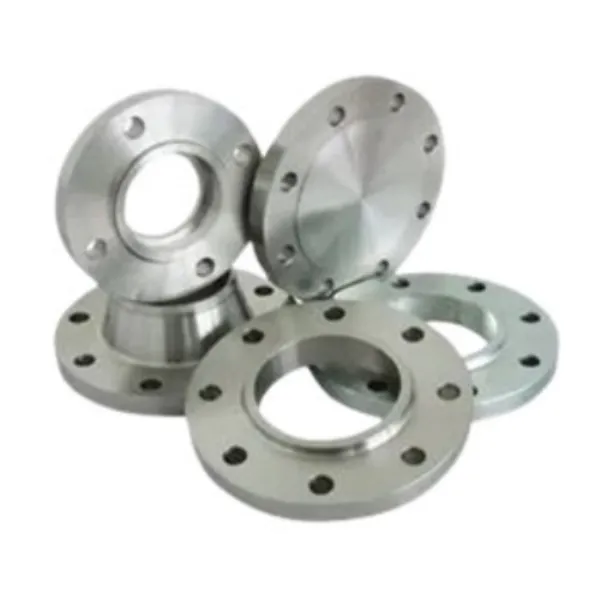
Examples commonly encountered in piping systems include:
- Weld neck flanges
- Slip-on flanges
- Blind flanges
- Threaded flanges
- Socket weld flanges
- Plate-type flanges
Each configuration serves a particular installation purpose.
A blind flange, for instance, is designed to close a piping end or nozzle. A weld neck configuration provides a different connection arrangement and is selected according to engineering requirements.
Why Pressure Classification Matters
One of the most important purchasing mistakes is treating diameter as the complete flange specification.
Two flanges with the same nominal bore may differ in pressure class, dimensions, bolt-hole pattern, thickness, facing, and applicable standard.
Procurement documents should therefore specify more than statements such as “4-inch MS flange.”
A more useful requirement identifies:
- Nominal size
- Flange type
- Material
- Standard
- Pressure class
- Facing requirement
- Quantity
This reduces ambiguity during quotation and material approval.
Dimensional Compatibility Cannot Be Assumed
Flanges connect with mating components, so dimensional compatibility is fundamental.
Bolt-hole arrangements, outside diameter, bore, thickness, and facing must correspond with the piping design and mating equipment.
Substituting a visually similar flange without checking these parameters can create problems during erection.
For fabrication companies and maintenance teams, dimensional verification becomes particularly important when replacing components in an existing installation.
Fabrication Quality Matters Too
The usefulness of a flange depends on more than its raw material.
Manufacturing accuracy affects alignment and installation. Buyers may therefore need to assess dimensional consistency, machining requirements, surface condition, and documentation according to the project specification.
S A Enterprise supplies industrial piping requirements including flanges, valves, fittings, and steel pipe solutions. For engineering customers in Bhosari, providing complete specifications at the enquiry stage helps the company identify requirements more accurately.
Better Specifications Reduce Procurement Errors
A flange is part of a connected piping assembly. It should never be evaluated independently from the pipe, valve, gasket, bolts, and equipment it must connect with.
Before ordering, confirm the piping standard, material requirement, pressure conditions, dimensions, flange facing, and mating component.
This specification-led approach is particularly useful for OEMs, fabrication companies, mechanical contractors, and plant maintenance teams managing multiple flange sizes.
For industrial operations in Bhosari, accurate flange procurement begins with understanding the complete connection rather than selecting a component by diameter alone.
Keywords