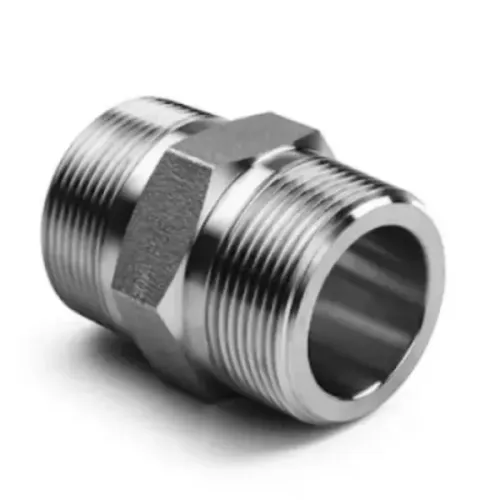
Threaded piping remains useful in many industrial, utility, plumbing, and infrastructure applications where welding is unnecessary or impractical. GI ISI Threaded Fittings provide a convenient method of creating changes in direction, branches, connections, and terminations in suitable piping networks.
For contractors and industrial buyers in Pune, however, selecting threaded fittings should involve more than matching two visible thread sizes.
Understanding GI Threaded Fittings
GI generally refers to galvanised iron or galvanised steel piping products protected by a zinc coating. The coating provides additional corrosion resistance for appropriate environments.
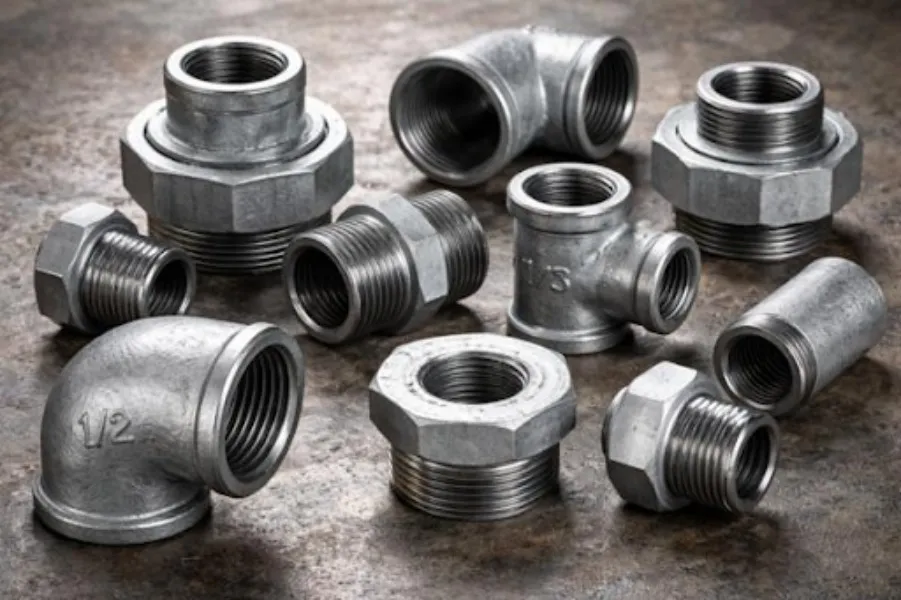
Threaded fittings may include:
- Elbows
- Tees
- Sockets
- Unions
- Nipples
- Bushes
- Plugs
- Caps
- Reducers
Their threaded construction allows installation without a welded joint.
Why Standardisation Matters
Consistency is particularly important in threaded systems.
Thread form, dimensional tolerances, fitting dimensions, wall characteristics, and material requirements need to correspond with the intended piping standard.
The term ISI is commonly used in the market in connection with products conforming to relevant Indian Standards and certification requirements. Buyers should verify the actual applicable standard and certification requirement rather than relying solely on a verbal description.
Thread Compatibility Is Essential
Not all threaded components are automatically interchangeable.
Different thread forms and standards can exist across industrial piping products. Attempting to assemble incompatible threads can cause poor engagement, damaged threads, or sealing difficulties.
Procurement documents should clearly state the required thread standard where it is relevant to the project.
Galvanising Does Not Eliminate Every Corrosion Risk
The protective zinc layer improves resistance in many applications, but GI fittings are not universally appropriate for every fluid or environment.
Chemical exposure, temperature, atmospheric conditions, water characteristics, contact with dissimilar metals, and service life expectations should all be considered.
For specialised industrial processes, material compatibility should be reviewed by the responsible engineer.
Correct Installation Matters
Threaded connections depend on good workmanship.
Threads should be clean and undamaged. Suitable sealing materials should be used according to the service. Components must be tightened appropriately without applying excessive force that could damage the fitting.
Installers should also avoid treating thread sealant as a substitute for correctly matched and properly formed threads.
Where These Fittings May Be Considered
Depending on the applicable specifications, threaded GI systems may be encountered in water distribution, utility piping, general industrial services, building services, compressed-air installations, and selected infrastructure applications.
The actual suitability depends on pressure, temperature, fluid, piping standard, and regulatory requirements.
For businesses purchasing GI ISI Threaded Fittings in Pune, creating a simple specification sheet can prevent confusion. It should identify fitting type, nominal size, thread requirement, applicable standard, quantity, and any certification expectations.
S A Enterprise serves industrial and contractor requirements for piping components where accurate identification is important to efficient procurement.
A threaded fitting may look straightforward, but a reliable system depends on compatibility at every connection. Buyers who verify standards, threads, coating requirements, dimensions, and service conditions before ordering are better positioned to achieve consistent installation quality across projects in Maharashtra.
Keywords